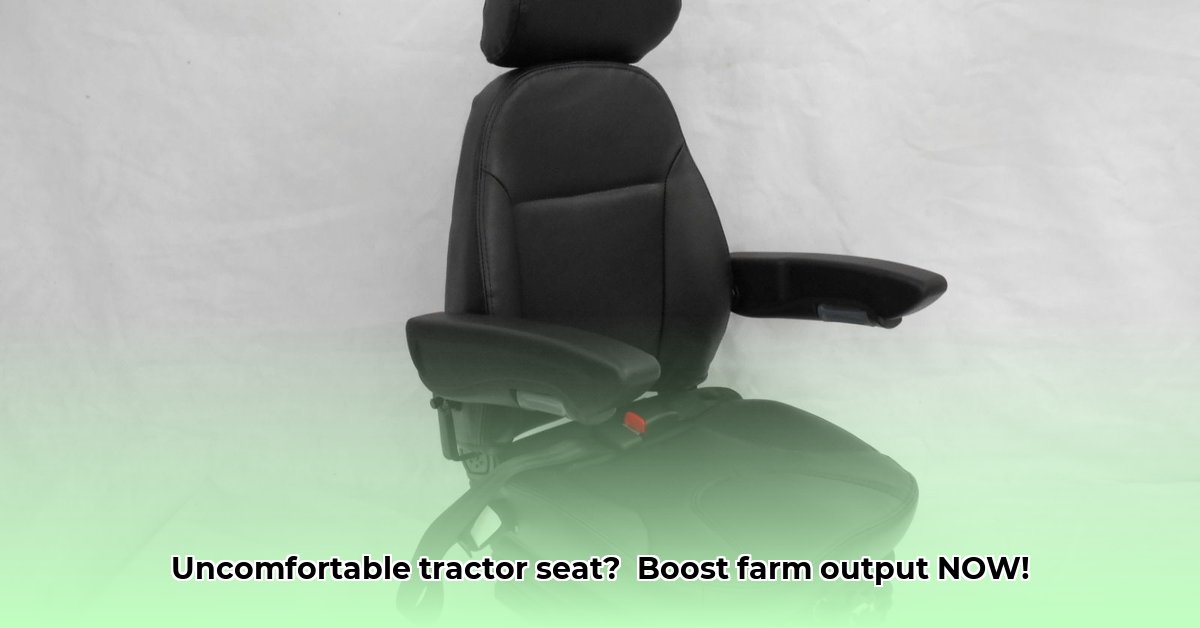
Tractor Seat Suspension: Drive Comfortably, Work Productively
Let's be honest: prolonged periods on a tractor can lead to discomfort, fatigue, and reduced efficiency. Back pain and exhaustion aren't just occupational hazards; they're indicators that your workspace needs improvement. Upgrading to a tractor seat with suspension is a significant step towards enhancing comfort and, surprisingly, boosting overall productivity. Consider it an investment in your well-being and your farm's success. Isn't a healthier, more productive you worth it?
For more information on seat replacement options, check out this helpful resource: seat replacement guide.
Understanding Your Options: Tractor Seat Suspension Explained
A quality suspension system acts as a personal shock absorber, mitigating the jarring bumps and vibrations inherent in fieldwork. Two primary types exist:
Mechanical Suspension: Utilizing springs and dampeners, these systems offer a balance of affordability and reliability. They provide adequate comfort on moderately uneven terrain. However, significant roughness may lead to a less comfortable ride.
Air Suspension: Employing pressurized air for cushioning, these systems offer superior comfort and customizability. You can adjust the firmness to match your preferences and the terrain. While more expensive and requiring more maintenance (regular air pressure checks), the enhanced comfort translates to significantly reduced fatigue.
Mechanical vs. Air Suspension: A Comparison
| Feature | Mechanical Suspension | Air Suspension |
|---|---|---|
| Cost | Lower initial investment | Higher upfront cost |
| Comfort Level | Suitable for average terrain; acceptable comfort | Superior comfort, especially on rough terrain |
| Adjustability | Typically limited adjustment options | Highly adjustable for personalized comfort |
| Maintenance | Less frequent maintenance requirements | Requires more frequent maintenance (air pressure checks) |
| Durability | Generally robust | Potential for punctures or air leaks |
Choosing the Perfect Tractor Seat: A Step-by-Step Guide
Selecting the ideal seat isn't merely about aesthetics; it's about finding the perfect fit for you, your tractor, and your work style.
Step 1: Compatibility Confirmation: Verify seat compatibility with your tractor model. Check mounting dimensions and connection points to ensure a secure and safe fit. Improper installation poses significant safety risks.
Step 2: Budget Allocation: Establish a realistic budget. Prices vary considerably based on features and suspension type. Prioritize features that maximize comfort and productivity within your budget.
Step 3: Work Environment Analysis: Consider your typical terrain. Do you primarily operate on smooth fields or challenging, uneven ground? This will heavily influence your choice between mechanical and air suspension.
Step 4: Ergonomic Prioritization: Look for features like adjustable lumbar support, comfortable armrests, and easily adjustable seat height. These are crucial for long-term comfort and minimizing fatigue. Consider climate control features; some models offer ventilation for warmer climates.
Step 5: Sustainability Emphasis: For environmentally conscious farmers, prioritize seats made from sustainable materials. Inquire about manufacturing processes and the recyclability of components. Many manufacturers are increasingly focusing on eco-friendly options.
Installing an Aftermarket Seat: DIY or Professional Help?
Installing an aftermarket seat might seem like a DIY project, but caution is advised. Incorrect installation can compromise safety. If unsure about any step, consult a qualified mechanic or your tractor dealer.
DIY Installation (Proceed with Caution):
Thorough Manual Review: Carefully read the manufacturer’s instructions before beginning. They provide essential guidelines for safe installation and operation.
Tool Acquisition: Gather all necessary tools and equipment; ensure they are in good working condition.
Precise Step-by-Step Execution: Follow each step precisely, taking your time and double-checking your work.
Comprehensive Testing: After installation, thoroughly test the seat for secure mounting and proper function. Seek professional assistance if anything feels amiss.
Maintaining Your Tractor Seat: Essential Tips
Regular maintenance is crucial for optimal performance and extended lifespan.
- Regular Cleaning: Prevent dirt and debris buildup, impacting comfort and longevity. Clean regularly with appropriate cleaning agents.
- Regular Inspections: Regularly check components (especially air pressure in air suspension systems) for leaks or damage. Address issues promptly.
- Lubrication: Keep moving parts lubricated to ensure smooth operation and prevent wear. Follow manufacturer recommendations.
- Component Replacement: Replace worn parts as needed to prevent larger issues later.
The Future of Tractor Seats: Emerging Trends
Technological advancements are continuously shaping the tractor seat landscape:
- Smart Seats: Sensor-equipped seats monitoring fatigue levels and automatically adjusting suspension are emerging.
- Eco-Friendly Materials: Increased use of bio-based and recycled materials is expected, reflecting the growing focus on sustainable agriculture.
- Advanced Suspension: Innovations promise smoother, more responsive rides, minimizing vibration and fatigue.
Investing in a high-quality tractor seat with suspension is more than comfort; it enhances productivity and well-being. A more comfortable operator is a more efficient and focused operator. It’s an investment in a healthier you and a more prosperous farm.